





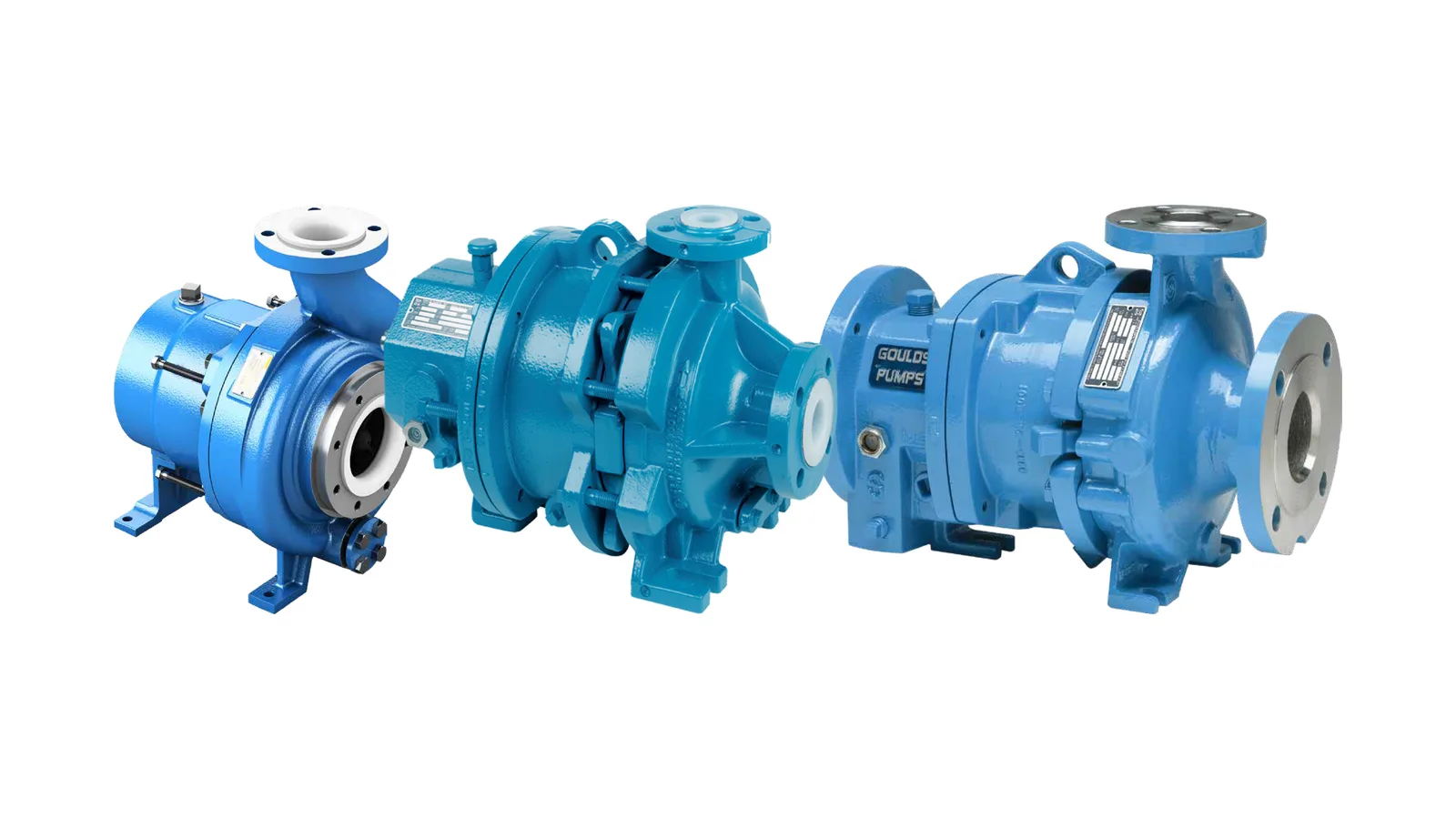
Nearly every stage of pulp & paper production moves corrosive and abrasive chemicals. Learn how chemical pumps work, the ITT Goulds Pumps range, material options, and how to select the right pump for your facility.
The pulp & paper industry has one of the most complex production processes in manufacturing. Nearly every production stage involves transferring chemicals such as white liquor, black liquor, green liquor, sulfuric acid, caustic soda, and chlorine dioxide, fluids that are corrosive, abrasive, and often at high temperature.
Keeping production safe and efficient requires pumping systems designed specifically to handle these fluids. One solution used in pulp and paper mills around the world is the chemical process pump.
Choosing the right chemical pump not only improves process reliability but also helps reduce maintenance costs, extend equipment life, and minimize the risk of downtime.
What Is a Chemical Pump?
A chemical pump is an industrial pump designed specifically to transfer chemical liquids whose characteristics conventional pumps cannot handle.
Pumped fluids include:
- White liquor
- Green liquor
- Weak black liquor
- Strong black liquor
- Caustic soda (NaOH)
- Sulfuric acid (H₂SO₄)
- Chlorine dioxide (ClO₂)
- Hydrogen peroxide
- Sodium hypochlorite
- Alum
- Starch solution
Because they handle corrosive and abrasive fluids, chemical pumps are built from materials with high resistance to chemical attack and severe operating conditions.
Why Are Chemical Pumps So Important in Pulp & Paper?
In a pulp and paper mill, a pumping system failure can halt production, increase energy consumption, and damage process equipment.
Chemical pumps play a key role in:
- Process chemical transfer
- Pulp bleaching systems
- Chemical recovery
- Stock preparation
- Water treatment
- Wastewater treatment
- Utility processes
Selecting the right pump lets a mill protect production continuity while improving operating efficiency.
How Does a Chemical Pump Work?
A chemical pump converts mechanical energy from the motor into hydraulic energy to move liquid from the suction side to the discharge.
In a centrifugal chemical process pump, the rotating impeller generates centrifugal force that drives the liquid into the piping system.
Key parameters that affect pump performance include:
- Flow rate
- Head
- Pressure
- Temperature
- Viscosity
- Specific gravity
- Net Positive Suction Head (NPSH)
- Best Efficiency Point (BEP)
Operating a pump away from its best efficiency point increases energy consumption and accelerates component wear.
Goulds 3196 ANSI Chemical Process Pump
The Goulds 3196 is the most widely used ANSI process pump series in the pulp & paper industry. It meets the ANSI/ASME B73.1 standard, giving it dimensional interchangeability that simplifies replacement and maintenance.
Main applications:
- White liquor
- Green liquor
- Weak black liquor
- Caustic soda
- Sulfuric acid
- Hydrogen peroxide
- Starch solution
Advantages:
- High hydraulic efficiency
- Back pull-out design for faster maintenance
- Wide choice of corrosion-resistant materials
- Low operating cost
Goulds 3298 Sealless Magnetic Drive Pump
For applications with a high leakage risk, the Goulds 3298 uses magnetic drive technology with no mechanical seal. It is ideal for handling chlorine dioxide, sodium chlorate, sulfuric acid, sodium hydroxide, and chemical bleaching solutions.
Advantages:
- Leak-free (sealless) design
- Lower mechanical seal replacement costs
- Improved workplace safety
- Suitable for hazardous chemicals
Goulds 3796 Self-Priming Process Pump
The 3796 series is designed for applications that need self-priming capability, so the pump can operate without an additional priming system.
Common applications:
- Effluent Treatment Plant (ETP)
- Wastewater transfer
- Chemical storage tanks
- Utility water systems
Vertical Process Pumps
For storage tank and sump applications, ITT Goulds Pumps offers a range of vertical process pump configurations, widely used on white liquor tanks, black liquor tanks, chemical storage tanks, clarifiers, and wastewater basins.
The vertical configuration saves installation space and simplifies the handling of corrosive liquids.
Chemical Pump Materials for Corrosive Fluids
Material selection is the main factor determining a chemical pump's service life. Commonly used materials include:
- Stainless steel: used for moderately corrosive liquids.
- Alloy 20: excellent for sulfuric acid and a wide range of corrosive chemicals.
- Hastelloy: highly resistant to strong acids, oxidizers, and very aggressive environments.
- PTFE: used for seal components and linings thanks to its very broad chemical compatibility.
- PVDF: a thermoplastic with high chemical and temperature resistance.
Chemical Pump Applications at Each Stage of Pulp & Paper Production
- Digester process: delivering white liquor to the digester for pulp cooking.
- Bleaching plant: transferring chlorine dioxide, hydrogen peroxide, sulfuric acid, and caustic soda.
- Chemical recovery: pumping black liquor, green liquor, weak liquor, and strong liquor.
- Stock preparation: transferring starch, fillers, and additives before sheet forming.
- Water & wastewater treatment: process water and industrial effluent treatment systems.
Challenges of Chemical Pump Service in Pulp & Paper
Frequently encountered problems include:
- Corrosion: caused by pump materials that do not match the chemical's characteristics.
- Abrasion: slurry and solid particles accelerate wear of the impeller and casing.
- Cavitation: low suction pressure forms vapor bubbles that damage the impeller.
- Mechanical seal failure: seal leakage causes downtime and higher maintenance costs.
- Efficiency loss: a pump operating far from its Best Efficiency Point (BEP) consumes more energy and loses performance.
How to Select the Right Chemical Pump
Before specifying a pump, consider these technical aspects:
- The chemical being pumped
- Flow rate
- Head
- Operating pressure
- Fluid temperature
- Viscosity
- Materials of construction
- Applicable industry standards
- Ease of maintenance
- Spare parts availability
A thorough analysis helps ensure the pump performs optimally while extending its operating life.
Why Choose ITT Goulds Pumps?
ITT Goulds Pumps has been trusted by process industries for decades for reliable pumping solutions in severe applications. Key advantages include:
- ANSI/ASME B73.1 standard
- High hydraulic efficiency
- Corrosion-resistant materials
- Back pull-out design for easier maintenance
- A complete range of configurations for every application
- Extensive spare parts and technical service support
- Proven in pulp and paper mills around the world
By selecting the right chemical pump series, a mill can improve system reliability, reduce operating costs, and protect production continuity.
Chemical Pump FAQ
- What is the difference between a chemical pump and a water pump? A chemical pump is built from materials that resist corrosive liquids, while a water pump is generally used for non-aggressive fluids.
- Which chemicals can a chemical pump handle? White liquor, black liquor, green liquor, sulfuric acid, sodium hydroxide, hydrogen peroxide, chlorine dioxide, sodium hypochlorite, and many other process chemicals, depending on the pump's materials of construction.
- Why are chemical pump materials so important? The right material prevents corrosion, extends pump life, and keeps the pumping system reliable.
- When should a magnetic drive pump be used? It is recommended for applications that require a leak-free system, especially when handling hazardous or high-value chemicals.
- How do I select the right chemical pump? Consider the fluid characteristics, flow capacity, pressure, operating temperature, materials of construction, and the overall process conditions.
Discuss Your Chemical Pump Requirements
Every process in the pulp & paper industry has its own challenges. Selecting the right chemical pump improves operating efficiency, reduces downtime risk, and extends equipment life.
Fluindo Technology Indonesia provides ITT Goulds chemical process pump solutions for applications across the pulp and paper industry. Our team is ready to help you specify the right pump based on your fluid characteristics, operating conditions, and production needs.
Contact our team for a technical consultation and a recommendation on the right chemical pump solution for your production facility.
Discuss your chemical pump requirements
Match the right ITT Goulds pump type, material, and configuration to your fluid and process conditions.