





The fishbone gasket is a high-performance sealing solution built for extreme pressure and temperature. Learn how it works, its advantages, and where it is applied across industries.
What Is a Fishbone Gasket?
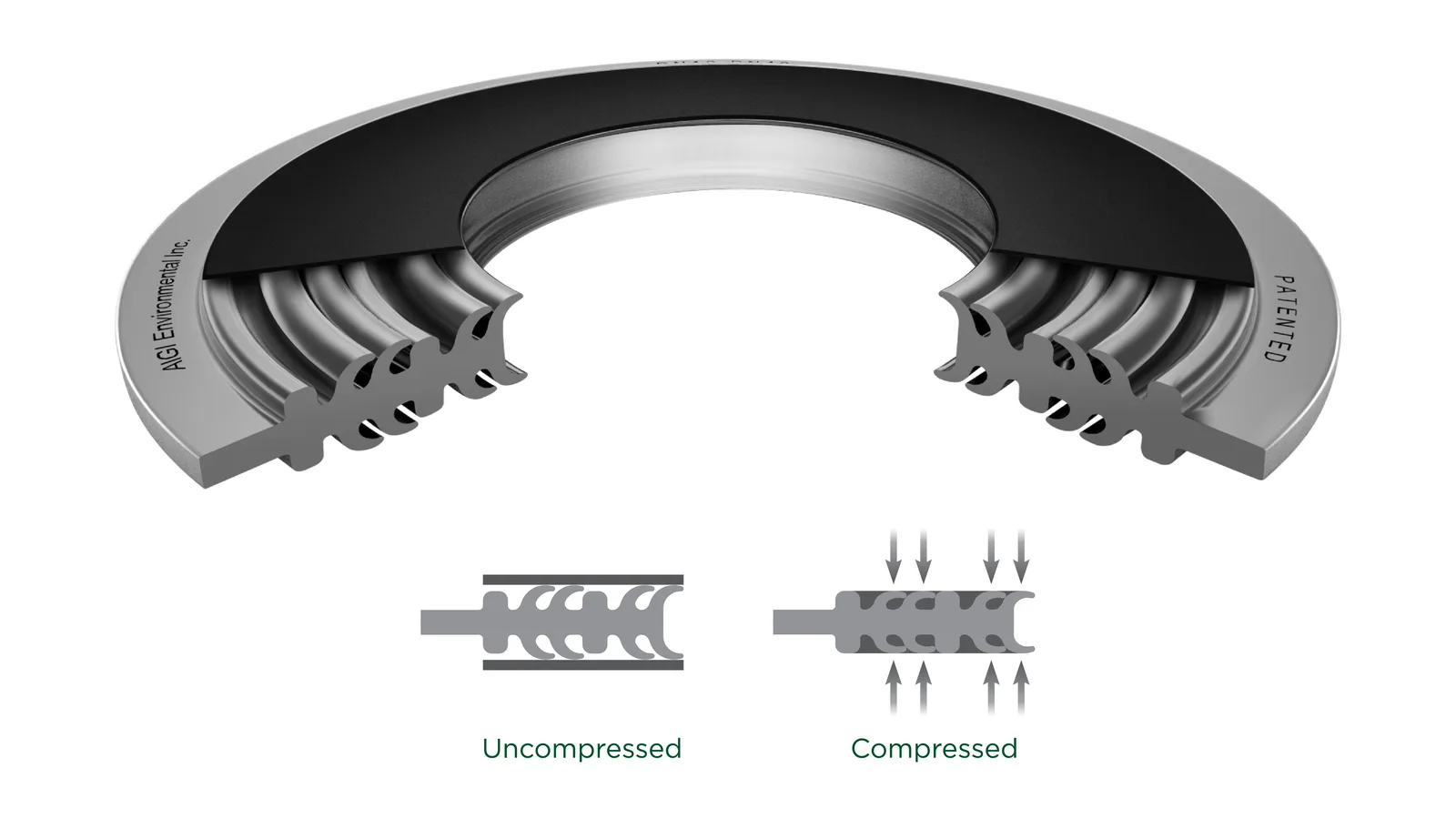
A fishbone gasket is a metallic gasket with a surface pattern that resembles a fish bone. The pattern is engineered to improve pressure distribution across the sealing area, producing more even contact between the flange and the gasket.
Unlike an ordinary flat gasket, the fishbone gasket has precise grooves that increase the material's flexibility while preserving its mechanical strength. This combination lets the gasket compensate for imperfections in the flange surface without sacrificing sealing performance.
Because of these characteristics, fishbone gaskets are widely used in piping systems that demand a high level of safety and require leakage risk to be kept to a minimum.
Key characteristics of a fishbone gasket include:
- A fish-bone sealing pattern
- Capable of operating at high pressure
- Resistant to extreme temperatures
- Suitable for a wide range of process media
- Suitable for repeated service with proper maintenance
Factors to Consider When Selecting a Gasket
Not all gaskets share the same specification. For optimal performance, several factors should be considered before choosing the product to use:
- Fluid type: the medium being handled is the main factor in choosing the gasket material. Corrosive fluids require materials such as stainless steel 316L or special metal alloys, while general applications can use more economical materials.
- Operating pressure: every gasket has a maximum pressure limit. Make sure the fishbone gasket specification matches the system's working pressure so it does not fail in service.
- Working temperature: the higher the operating temperature, the more important it is to choose a material with good thermal stability.
- Flange type: the gasket must be compatible with the flange standard in use, such as ASME, ANSI, DIN, or JIS.
- Industry standards: for critical applications, use a gasket that meets international standards so its quality and reliability are verified.
Fishbone Gasket Applications Across Industries
The fishbone gasket's ability to deliver reliable sealing makes it widely used across sectors that operate piping systems, pressure vessels, heat exchangers, and other process equipment. With the right material selection, this gasket can work across a wide range of pressure, temperature, and process-media conditions.
Mining
Mining piping systems often carry slurry, process water, tailings, and various supporting chemicals under demanding conditions such as high pressure, equipment vibration, and abrasive environments. Fishbone gaskets help keep flange joints tight so leakage risk is minimized, workplace safety improves, downtime is reduced, and production continuity is maintained.
Pulp & Paper
Pulp and paper mills run a variety of piping systems carrying steam, white liquor, black liquor, and other process chemicals. The combination of high temperature and corrosive media makes gasket selection critical. With even pressure distribution, fishbone gaskets maintain sealing performance under these conditions, improving equipment reliability and reducing how often gaskets must be replaced.
Power Generation
In power plants, boiler systems, steam lines, feed water, and heat exchangers operate at high pressure and temperature. Fishbone gaskets are designed to maintain flange-joint integrity even through repeated heating and cooling cycles, helping to improve operating efficiency while lowering maintenance costs.
Chemical & Petrochemical
Chemical and petrochemical facilities handle a range of fluids with different characteristics, from corrosive liquids to high-pressure gases. Fishbone gaskets are available in a wide choice of metal materials, so they can be matched to the process-media characteristics and operating conditions while maintaining a long-term seal.
Water & Wastewater Treatment
Water and wastewater treatment plants use piping networks, pumps, and pressure vessels that run continuously. Fishbone gaskets keep joints tight so the system can operate efficiently with a lower risk of leakage.
Installation Tips for Maximum Fishbone Gasket Performance
Gasket performance is determined not only by design and material but also by the installation process. Installation errors can cause leaks even with a high-quality gasket. Recommended best practices include:
- Clean the flange surface before installation
- Ensure there are no scratches or deformation on the flange
- Use a new gasket for each installation when the manufacturer recommends it
- Tighten the bolts using a cross tightening pattern
- Apply the torque value per the technical specification
- Re-check after the system reaches operating temperature
With correct installation procedures, the fishbone gasket's service life can be extended while reducing the risk of leakage during operation.
Fishbone Gasket FAQ
- Can a fishbone gasket be used at high pressure? Yes. Fishbone gaskets are designed to deliver stable sealing performance in high-pressure applications, as long as the specification matches the operating conditions.
- Which material is most commonly used? Stainless steel, especially SS304 and SS316, because it offers good corrosion resistance and mechanical strength.
- Is a fishbone gasket suitable for oil and gas? Very suitable. Fishbone gaskets are widely applied on piping systems, pressure vessels, heat exchangers, and processing facilities.
- Can a fishbone gasket be used at high temperature? Yes. The metal materials used allow the gasket to work at high temperature without significantly losing its sealing capability.
- What are the main causes of fishbone gasket failure? Installation that does not follow procedure, incorrect bolt torque, damage to the flange surface, and material selection that does not match the process media.
- How do I select the right fishbone gasket? Consider the fluid type, working pressure, operating temperature, flange size, applicable industry standards, and recommendations from a trusted manufacturer or distributor.
Conclusion
The fishbone gasket is a metallic sealing solution designed for industries whose operating conditions demand high reliability. Its fish-bone surface pattern enables more even pressure distribution, producing better sealing performance than several types of conventional gaskets.
These advantages make fishbone gaskets widely used across mining, pulp & paper, power generation, chemical, petrochemical, and water treatment. By choosing the right material and following correct installation procedures, gasket service life can be optimized while helping reduce the risk of leakage and downtime.
Before deciding on a gasket type, make sure its specification matches the working pressure, operating temperature, fluid characteristics, and flange standard used in the system. The Fluindo team is ready to help ensure every application achieves safe, efficient, and sustainable sealing performance — talk to our engineers about your service conditions, or browse our rotary equipment, valves, sealing devices, and heat exchangers.
Discuss Your Fishbone Gasket Requirements
Match the right fishbone gasket material, size, and flange standard to your pressure, temperature, and process fluid.