



AIGI Environmental Inc.
AIGI 26WSC Silicone-Core PTFE Valve Packing
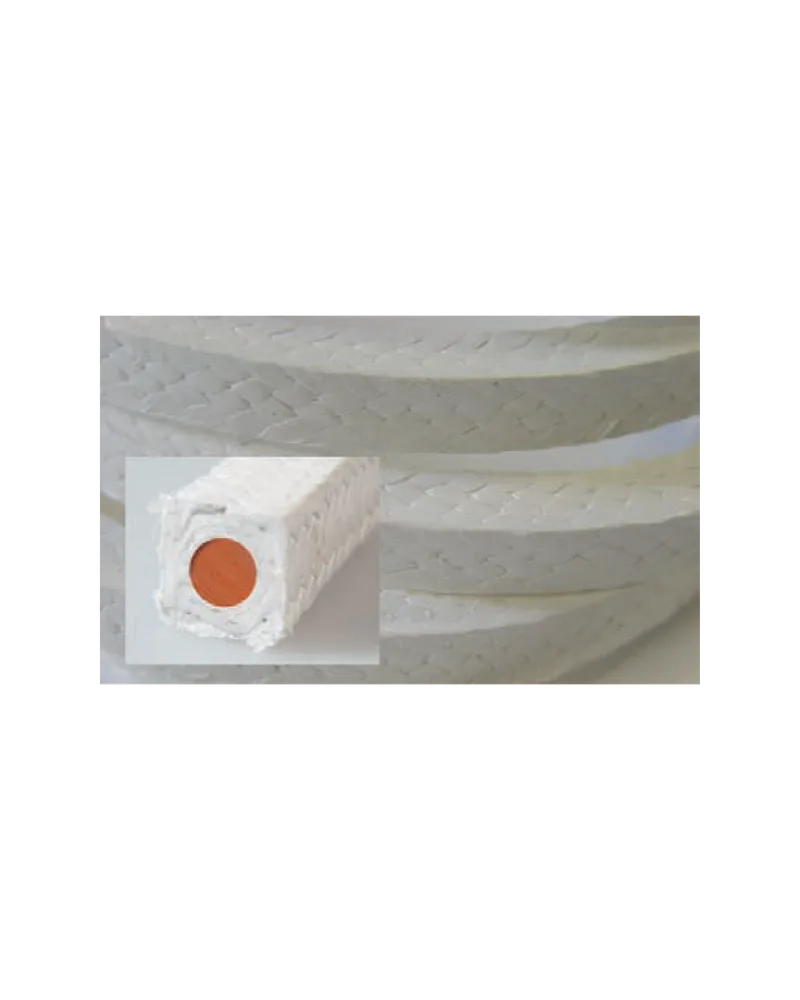
AIGI 26WSC is the pure, non-hardening PTFE packing AIGI 26W, built around a single resilient silicone-rubber core. The elastic core gives the braid better memory, so it follows radial shaft motion and vibration while keeping leakage under control. It is widely used in pump applications that need extra stability because of shaft runout.
Product Benefits
- Resilient core memory: On a shaft with runout, packing without resilience is soon hammered into a permanent set and starts to leak. The silicone core in AIGI 26WSC springs the pure-PTFE braid back against the shaft after every deflection.
- Stable leakage control: Excellent leakage control is maintained with minimal gland adjustment.
- Gentler on the sleeve: Less frequent tightening means less maintenance and gentler treatment of the shaft sleeve.
- Pure PTFE virtues: The braid itself keeps all the virtues of pure PTFE: broad chemical resistance, low friction and a non-hardening character that preserves sealability over long service.
Where It's Used
- Shaft-stabilising duty: Typical applications are general-service pumps, mixers and agitators where the packing set is expected to stabilise the shaft.
- Moderate radial runout: It earns its keep wherever moderate radial runout would otherwise shorten packing life.
- Worn and side-loaded shafts: Worn pumps, side-loaded shafts and long agitator spans are classic cases.
Good to Know
- White PTFE family: AIGI 26WSC is the single-core member of the white PTFE family: plain AIGI 26W for valves and stable shafts, 26WSC for noticeable runout, and multi-core AIGI 26WMSC for extreme motion.
- No colour contamination: The white, graphite-free construction suits services where colour contamination matters.
- Heat and chemical range: It withstands high service temperatures and a wide range of acids and alkalis, although the silicone core makes it a little less chemically universal than the core-less braid.
- Reciprocating advantage: Like its siblings it carries a higher pressure rating in reciprocating duty than in rotary service.