



ITT Engineered Valves
Skotch Burner Shut-Off Valve for Oil-Fired Systems
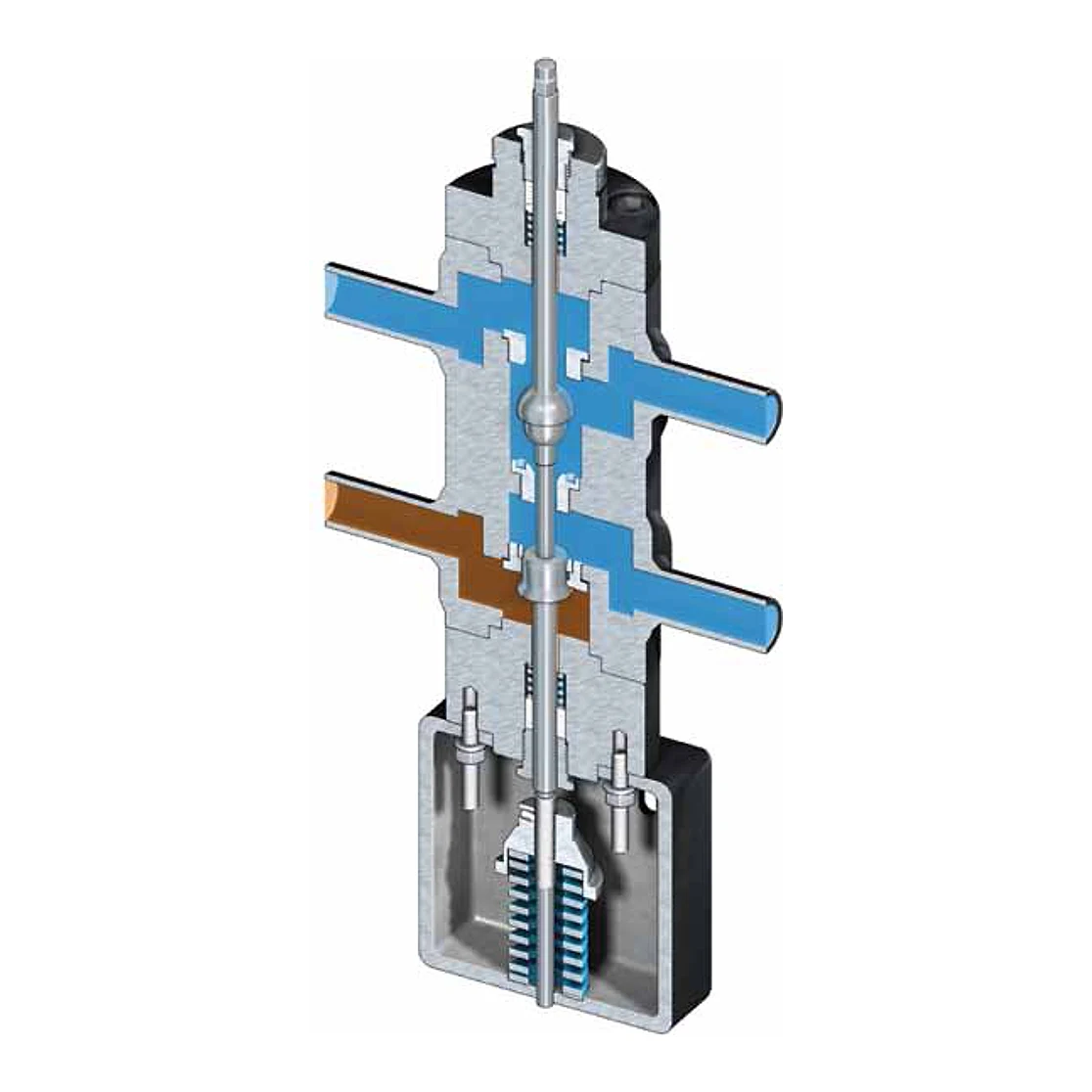
The Skotch oil-fired burner shut-off valve is a double-block-and-vent style safety valve engineered for oil burners and igniters. A single valve body houses the oil shut-off, purge and atomizing functions, replacing at least three conventional valves and their actuators.
Product Benefits
- Three functions, one body: The fuel, purge and atomizing paths are integrated in a single body, so the functions cannot operate out of sequence.
- Clean atomizing medium: The design keeps the atomizing medium from being contaminated by fuel oil.
- Positive proof of closure: The burner-management system receives confirmation that the valve has closed.
- Dual-seated oil port: The oil port pairs a resilient soft seat with a flow-to-close metal backup seat for dependable isolation, and the atomizing and purge ports are held to a tight leakage class as well.
- Safe on loss of supply: If electrical or pneumatic supply is lost, the valve fails closed or holds its last position, according to the configuration chosen.
Where It's Used
- Every atomizing method: It works with steam-, air- and mechanically atomized oil-burner arrangements.
- Main burners and igniters: Both duties are covered by the same valve.
- Broad fuel compatibility: Fuels span light fuel oil through Bunker C, crude and waste oils.
- Difficult fuels: That makes it valuable on boilers and fired equipment burning hard-to-handle fuels.
Good to Know
- Codes and standards: The valve is designed to comply with NFPA and insurer (IRI) guidelines, and it meets or exceeds the FM standard for safety shut-off valves.
- Factory Mutual approval: Specific models carry Factory Mutual approval with the appropriate accessories.
- Actuation choices: Actuation is electropneumatic spring-return or electrohydraulic depending on the series.
- Compact igniter series: A compact series exists for smaller igniter duties.
- Ends and pressure variants: Weld, threaded and flanged end connections let it fit existing fuel trains, hazardous-area electrical options are available, and higher-pressure fuel variants can be specified where the firing system demands them.