



ITT Engineered Valves
Skotch Burner Shut-Off Valve for Gas-Fired Systems
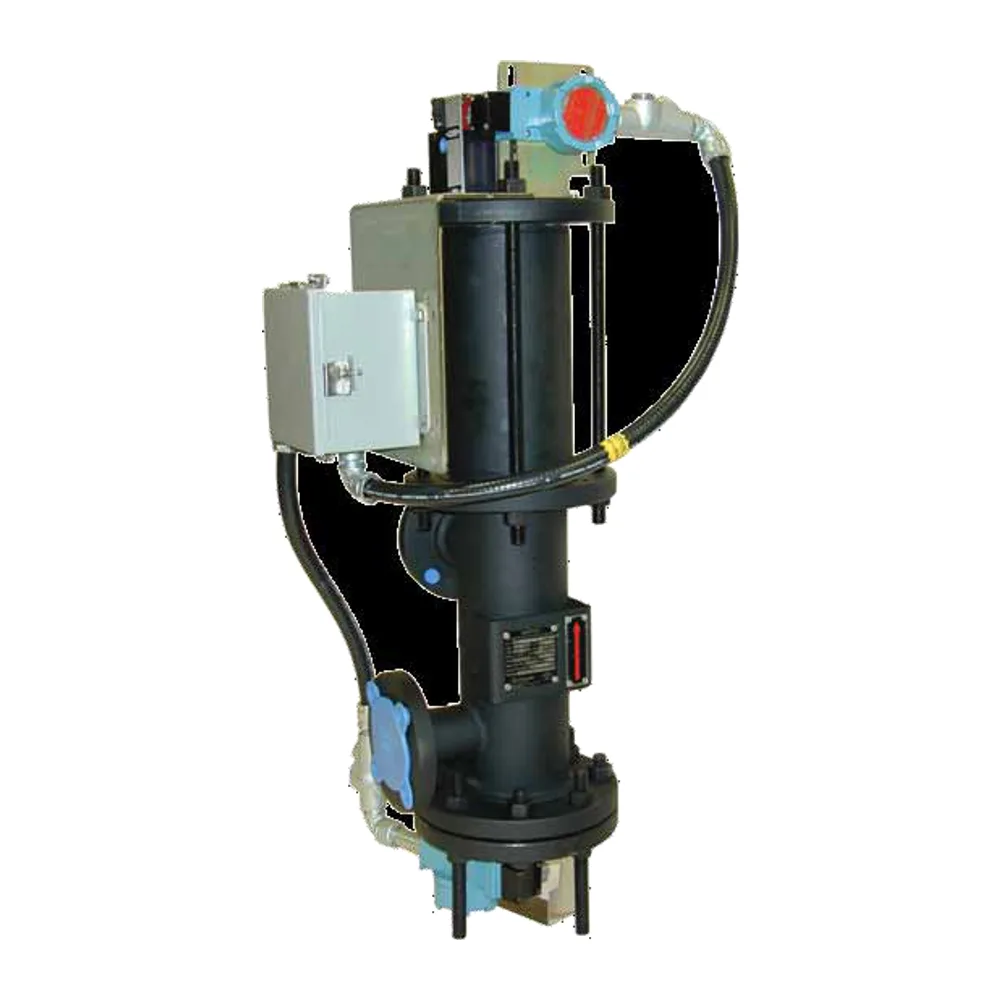
The Skotch Trifecta is an automated double-block-and-vent safety shut-off system for gas-fired burners and igniters. It combines two independent block valves and a normally open vent valve in a single housing driven by one actuator, doing the work of three conventional valves and their actuators.
Product Benefits
- One body, correct sequence: Blocking and venting are coordinated mechanically inside a single body, so the valves always operate in the right order.
- No linkage to drift: There is no exposed linkage that can wander out of adjustment.
- Fails to a safe state: The block valves are spring-to-close and the vent is normally open, and the fail-closed arrangement carries Factory Mutual approval.
- Tightest leakage class: Every port is soft seated with a metal-to-metal backup seat, giving shut-off to the tightest standard industrial leakage classification.
- One actuator to maintain: A single actuator means one air connection and one control signal, with far less to install and maintain than a three-valve train.
Where It's Used
- Fuel-gas trains: It is applied on fuel-gas trains for burners and igniters.
- Common fuel gases: Natural gas, propane and other fuel gases are all handled.
- Boilers and process heating: Typical installations are boilers, furnaces and process heating equipment where codes and insurers call for double-block-and-vent isolation.
Good to Know
- Two body constructions: Cast carbon-steel bodies cover the smaller line sizes and fabricated carbon-steel bodies the larger ones, with stainless and aluminum trim.
- Easy piping: Flanged inlet and outlet connections and a choice of vent connection styles simplify piping into existing trains.
- Simple air supply: The electropneumatic actuator needs only a clean, dry instrument-air supply.
- Failure modes to suit: Fail-in-last-position as well as fail-closed configurations exist.
- Codes and approvals: The design meets or exceeds the FM standard for safety shut-off valves, follows NFPA and insurer vent-sizing recommendations, and hazardous-area electrical options are available.