




SLV
Fluorine-Lined Butterfly Valve
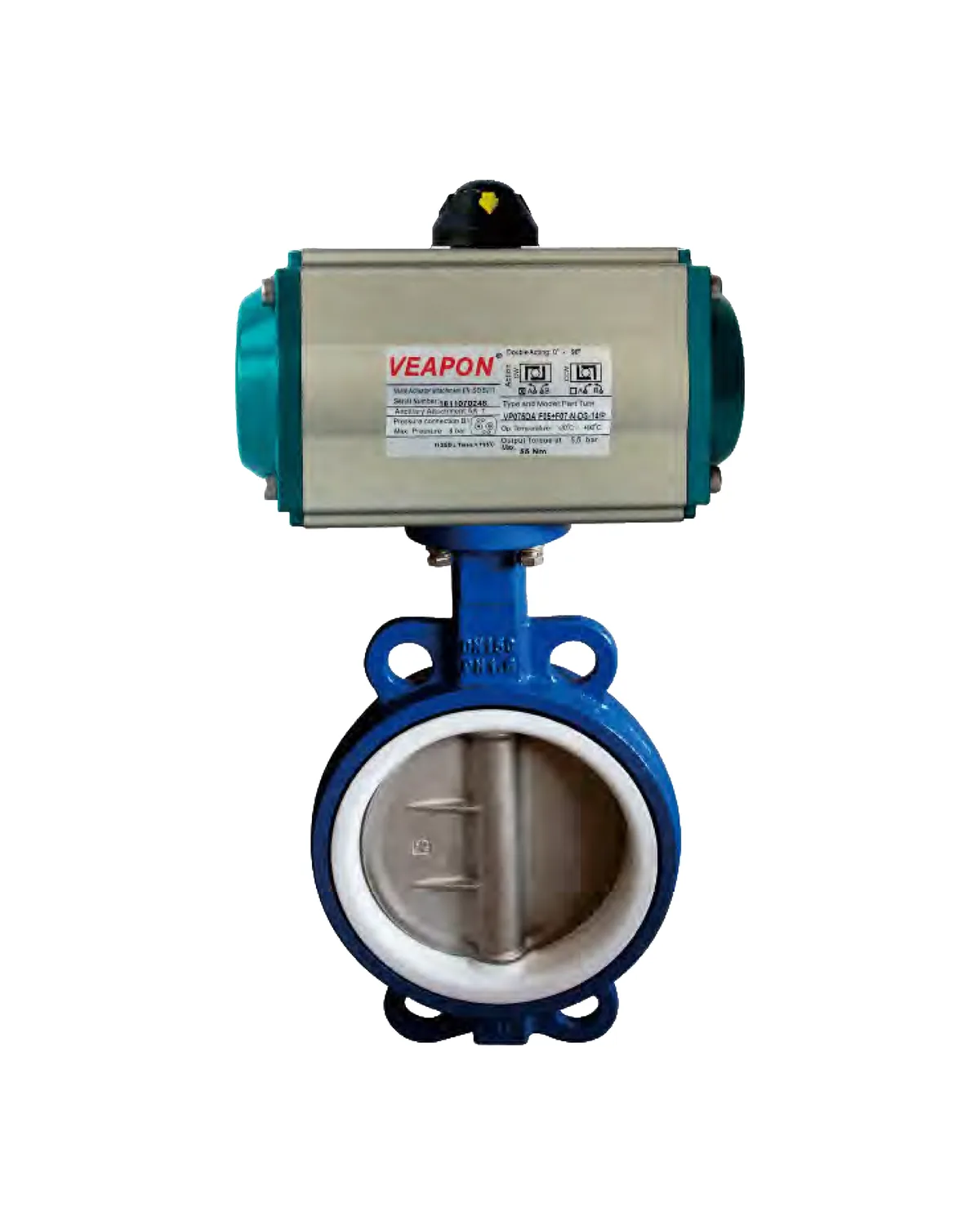
The SLV Fluorine-Lined Butterfly Valve isolates every wetted surface behind a fluoropolymer lining, so the flowing medium never touches the metal body. That makes it a dependable, economical answer for strong acids and other aggressive chemicals that would attack conventional valve materials.
Product Benefits
- Chemically inert lining: Fluoropolymers such as PTFE and PFA are among the most chemically inert materials available, shrugging off media that corrode even high-grade stainless steels.
- Alloy resistance, lower cost: Lining a butterfly valve with them delivers that resistance at a fraction of the cost of a valve machined from exotic alloy.
- Body never sees the medium: The lining covers the full flow path, seat and disc included, so the pressure-bearing body can be an ordinary carbon-steel or iron casting.
- Three benefits in one: The result is corrosion protection, tight quarter-turn shutoff and a compact wafer-style installation in a single package.
Where It's Used
- Aggressive chemical service: Its natural habitat is acid and alkali transfer as well as chemical dosing and processing lines.
- Beyond standard seats: Any duty where the medium is too corrosive for standard rubber-seated or metal-seated valves falls in its territory.
- Chemical plants: Chemical plants and related process industries are the typical buyers.
- Manual or automated: With a standardised top flange for actuator mounting, the valve works equally well as a manually operated isolation valve or as part of an automated chemical handling system.
Good to Know
- Body and disc options: The body casting comes in carbon steel, ductile iron and several stainless grades, while the disc can be fluoropolymer-covered or solid stainless.
- Seat lining: Seat linings use PTFE-family materials backed by an elastomer energiser.
- Check pressure and temperature together: Service capability depends on the combination of pressure and temperature, so always check the pressure-temperature relationship for your specific duty rather than treating the limits independently.
- Handle the lining with care: Fluoropolymer linings are chemically tough but mechanically delicate: protect the sealing faces during transport and installation, never drag the valve across the lining, and torque flange bolts evenly.
- Keep it on clean duty: Solid particles and abrasive slurries shorten lining life, so this valve is best kept on clean liquid and gas duties.